Fiberglass vs Polypropylene vs Acrylic Hot Tub — Which Liner Material Is Best?
A modern wooden hot tub pairs a warm timber exterior with a hygienic liner inside — but which liner material should you choose? In this guide we compare fiberglass, acrylic and polypropylene honestly: prices, colours, shapes, feel and day-to-day maintenance, so you can pick the tub that truly fits your garden and budget.
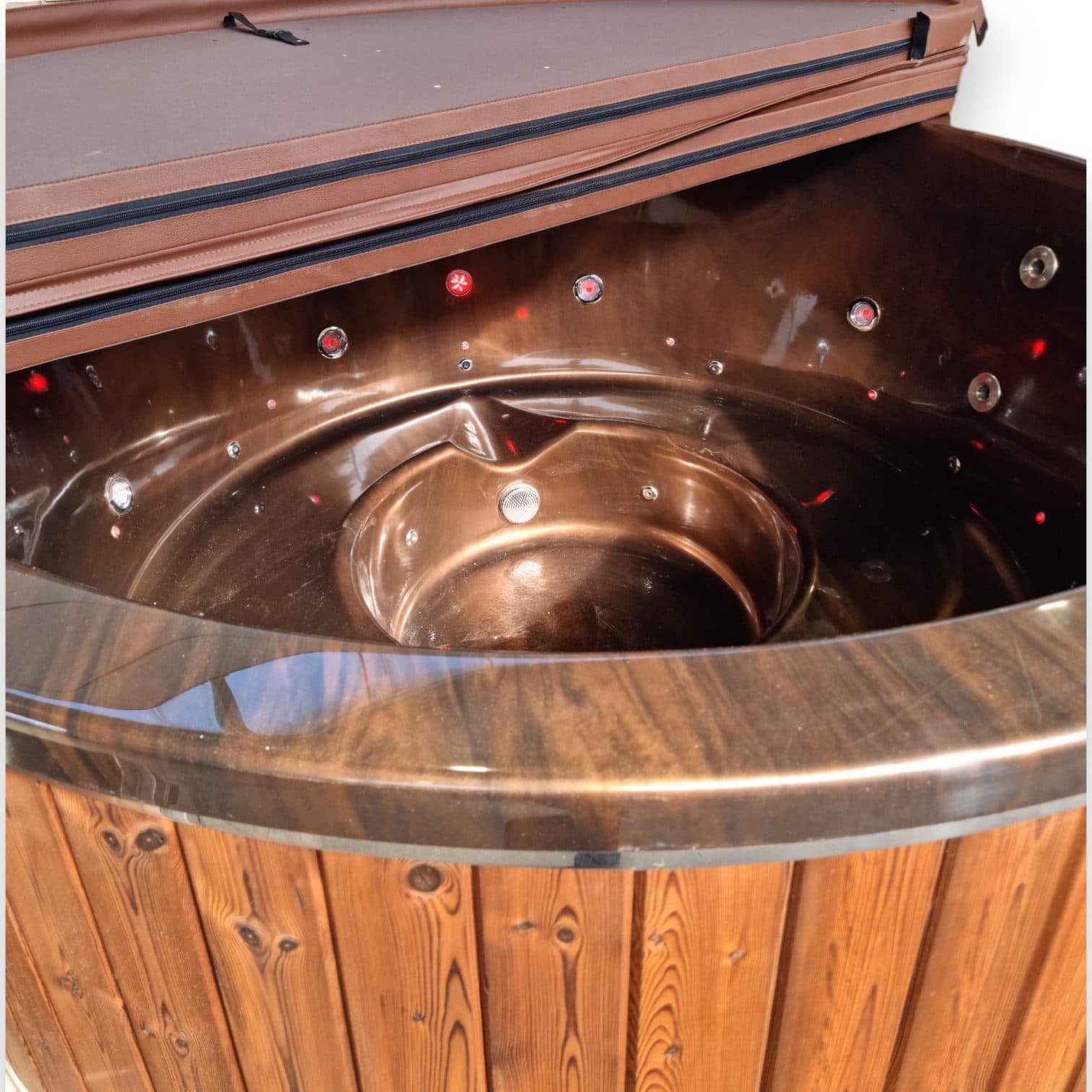
Why a wooden hot tub with a liner beats bare wood
Traditional hot tubs with a bare wooden interior look romantic, but owning one is hard work. Wood in constant contact with water swells, shrinks, can develop leaks and needs regular oiling, tightening and very careful cleaning to stay hygienic.
That is why every Wild Tubs hot tub combines a genuine wooden exterior — spruce, larch, thermowood or maintenance-free WPC cladding — with a modern liner inside. You keep the natural look and the wood-fired ritual, while the smooth waterproof interior gives you easy hygiene, no swelling, no leaks and cleaning that takes minutes instead of hours. It is the practical evolution of the wooden hot tub, and the reason liner tubs now dominate the European market.
Fiberglass liner: the best value all-rounder
A fiberglass hot tub liner has a smooth gelcoat surface that feels pleasant on the skin, holds heat well and wipes clean easily. It is the most popular choice among our customers because it hits the sweet spot between price and quality.
- 8 colours: dark grey, light grey, cream plus 5 granite finishes
- Available in classic round tubs, the Japanese ofuro oval and a dedicated cold tub
- Optional extra vinyl layer for additional surface protection
- Prices from roughly €1,440–1,620
If you want a wooden hot tub with a plastic liner that simply works, looks good and does not stretch the budget, fiberglass is the safe recommendation.
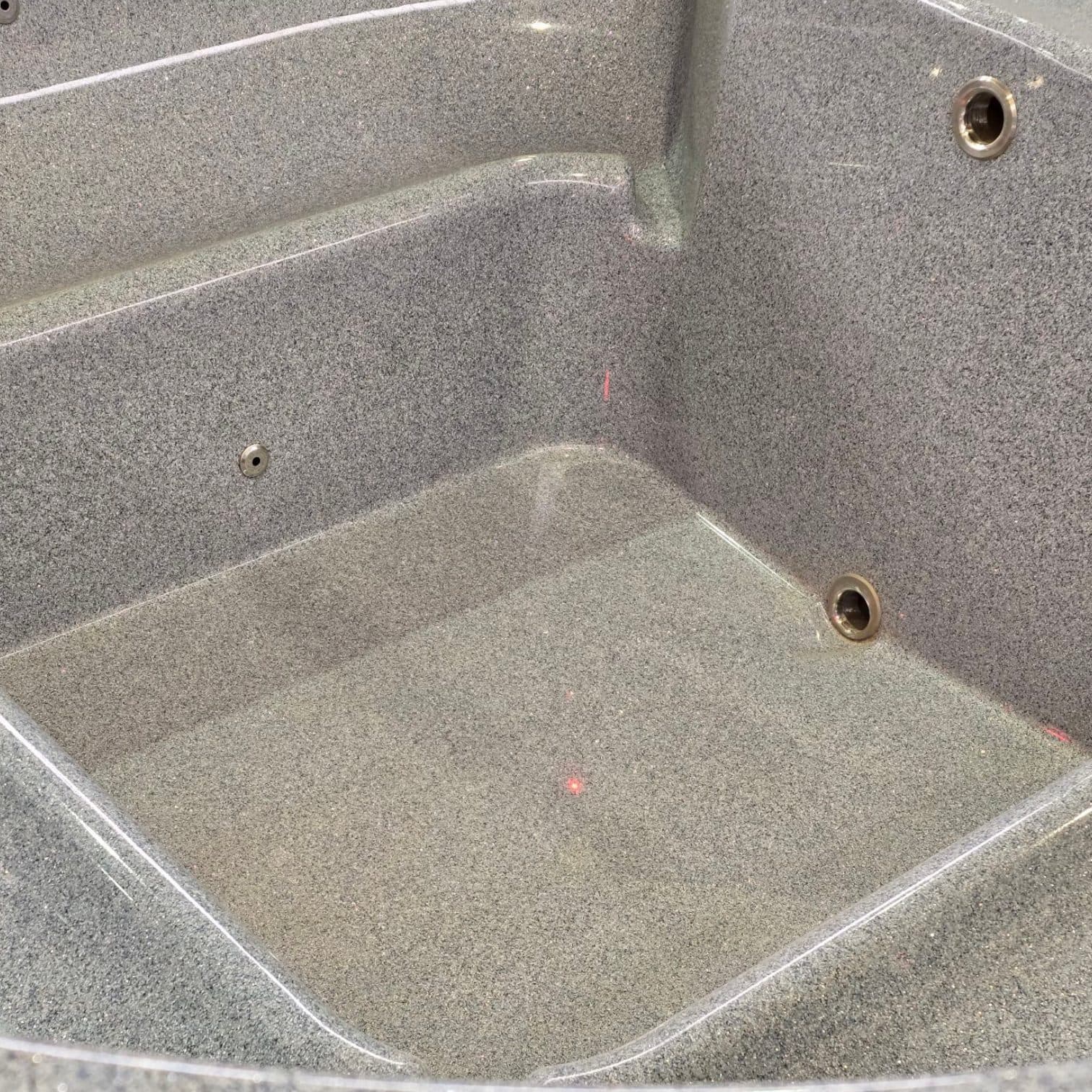
Acrylic liner: the premium flagship
Acrylic is our flagship liner material. The surface is glossy, rigid and luxurious — closer to a high-end spa than a garden tub — and the colour range is the widest of the three.
- 12 colours, including white, grey and 6 marble finishes
- Round and square shapes; the square acrylic model comes with comfortable bench seating
- A jacuzzi model with a corner stove option for a true spa layout
- Prices from roughly €1,860–2,400
Choose acrylic if aesthetics matter to you, if you want a white or marble interior that brightens the water, or if you prefer the extra stiffness and premium feel underfoot.
Polypropylene liner: rugged, practical, budget-friendly
Polypropylene (PP) is the workhorse of hot tub materials. It is extremely tough, tolerates knocks and intensive use, and is the cheapest material to maintain — which is exactly why PP tubs are so popular with rental businesses, guest houses and busy families.
- 5 colours, in round and square shapes
- Four sizes: 1.6, 1.8, 2.0 and 2.2 m, each with size-matched insulation
- Prices from roughly €1,440–1,680
PP does not have the gloss of acrylic or the granite look of fiberglass, but if durability per euro is your measure, nothing beats it.
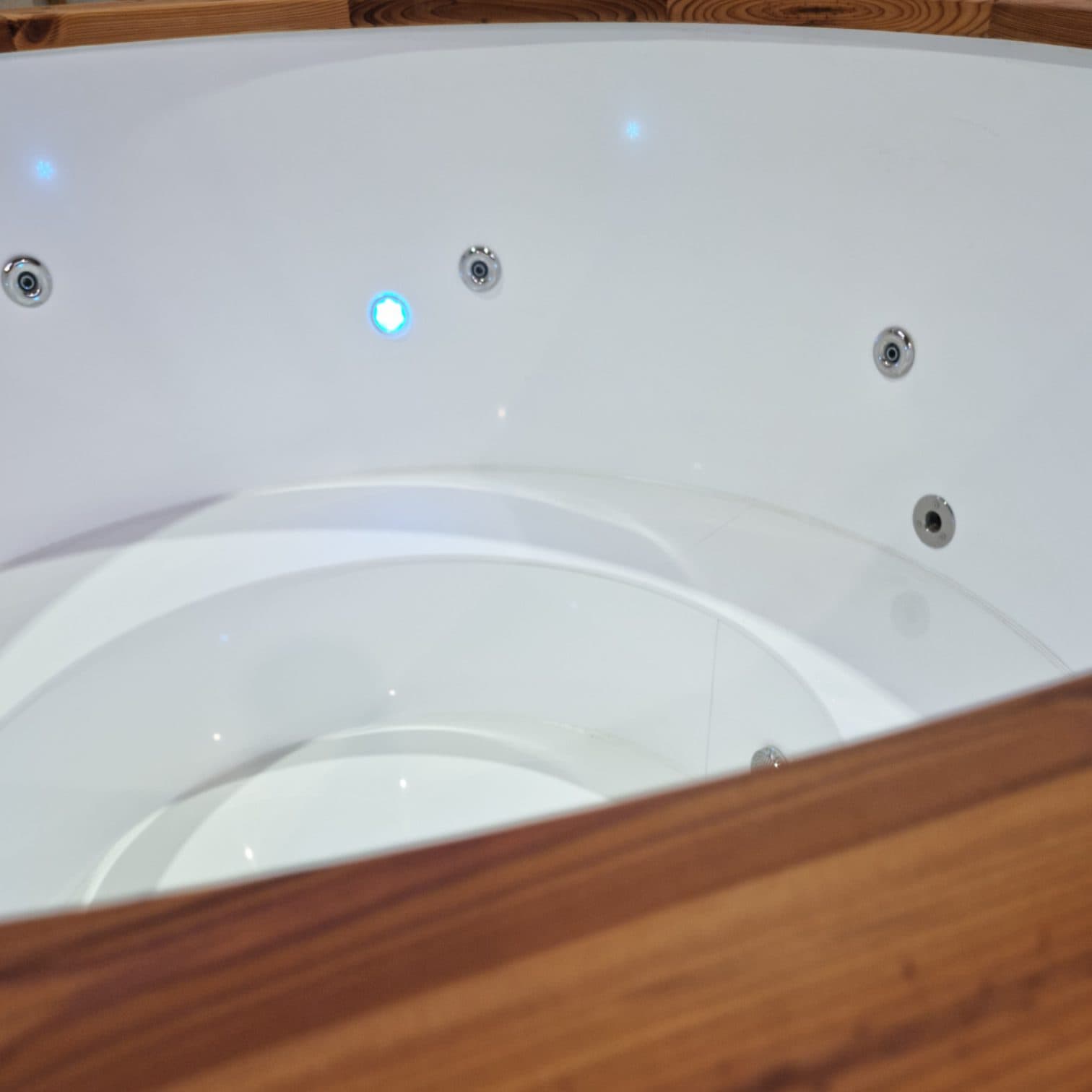
Fiberglass vs acrylic vs polypropylene at a glance
- Price: fiberglass from ~€1,440–1,620; PP from ~€1,440–1,680; acrylic from ~€1,860–2,400
- Look and feel: acrylic is the most premium (glossy, marble options); fiberglass is smooth gelcoat; PP is matte and practical
- Colours: acrylic 12, fiberglass 8, PP 5
- Shapes: fiberglass — round, ofuro oval, cold tub; acrylic — round, square with bench, jacuzzi; PP — round and square in 4 sizes
- Durability: all three last many years; PP is the most impact-resistant, acrylic the stiffest
- Maintenance: all three are far easier than bare wood; PP is the cheapest to keep, acrylic and fiberglass wipe spotless fastest
- Best for: fiberglass — best price/quality balance and most popular; acrylic — premium aesthetics; PP — rentals and heavy use
How to choose — and what stays the same
Whichever liner you pick, the rest of the hot tub is up to you. The wooden exterior comes in spruce (classic, best price), larch (more durable, richer colour), thermowood (heat-treated, dark and very stable) or WPC composite (zero maintenance). All three liner materials work with wood-fired or electric heating, hydro and air massage, LED lighting, filtration and insulated covers.
Every tub is handmade in Lithuania and delivered across the EU directly from the manufacturer — no middlemen. The easiest way to decide is to open the online configurator, combine liner, wood and options, and watch the live price update as you build your ideal tub.
Frequently asked questions
Which hot tub liner material is best overall?
There is no single winner — it depends on your priorities. Fiberglass offers the best price-to-quality balance and is the most popular choice. Acrylic is the premium option with the finest look and 12 colours. Polypropylene is the toughest and cheapest to maintain.
Is a hot tub with a plastic liner better than a traditional all-wood tub?
For most owners, yes. A liner eliminates the swelling, leaks and constant maintenance of a bare wooden interior, and makes cleaning and hygiene far simpler — while the wooden exterior keeps the authentic look and atmosphere.
How much does a wooden hot tub with a liner cost?
Fiberglass models start at roughly €1,440–1,620, polypropylene at €1,440–1,680 and acrylic at €1,860–2,400. The final price depends on size, wood cladding, heater and extras — the online configurator shows a live price as you choose.
What is the difference between fiberglass and acrylic liners?
Fiberglass has a smooth gelcoat surface, 8 colours and the lower price. Acrylic is stiffer and glossier, comes in 12 colours including white and 6 marble finishes, and is available in square models with bench seating and a jacuzzi layout.
Which material is best for rentals or frequent use?
Polypropylene. It shrugs off knocks and intensive use, and it is the cheapest material to keep in good condition, which is why rental businesses choose it most often.
Can every liner material be used with a wood-fired stove?
Yes. Fiberglass, acrylic and polypropylene tubs all work with wood-fired or electric heating, and can be fitted with massage systems, LED lighting, filtration and an insulated cover.